Audio for breakout rooms: a small-room playbook
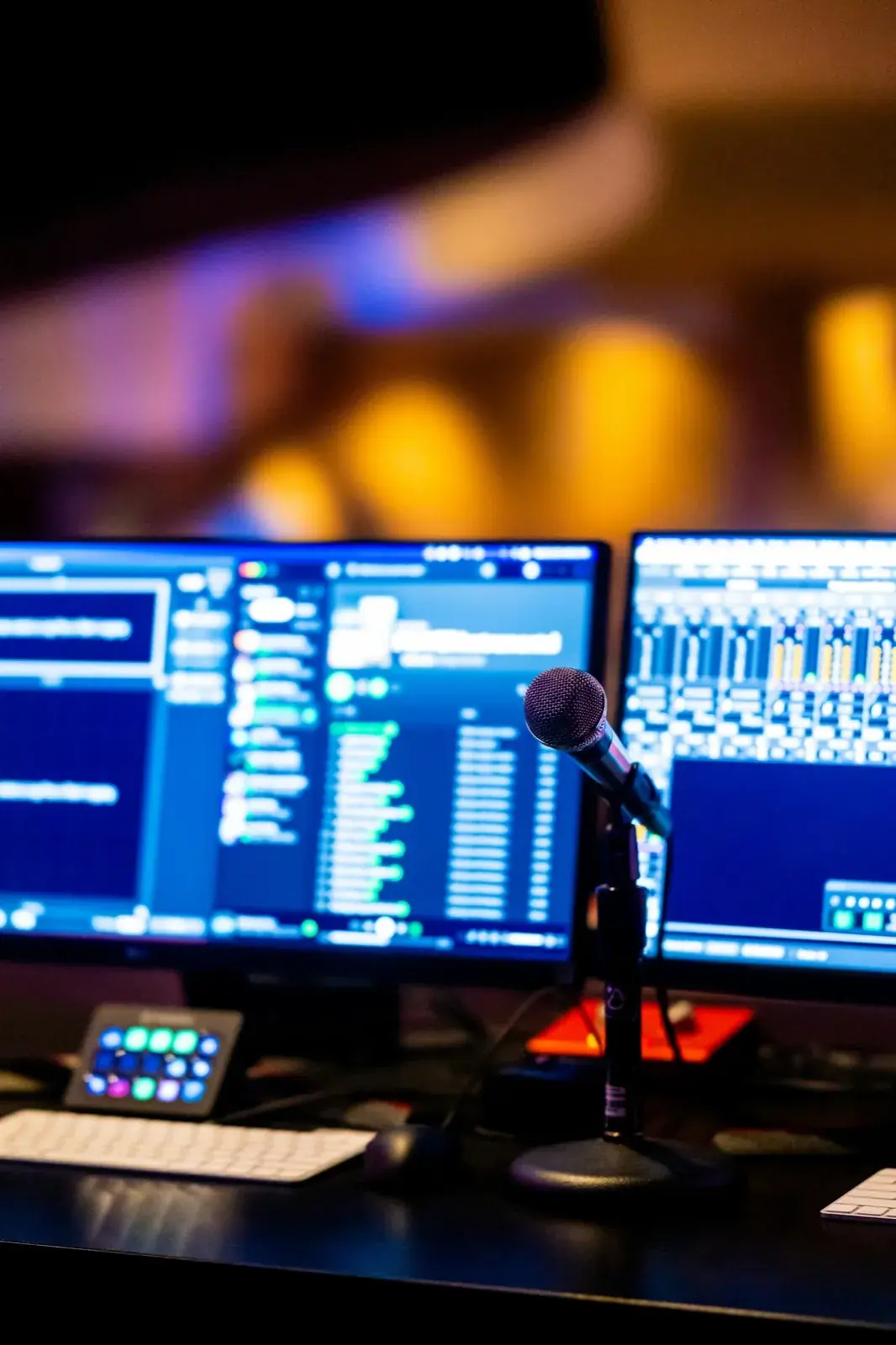
Breakouts are the part of an event where production usually thins out — and the audio suffers for it.
Breakout rooms are the part of an event where production usually thins out. The keynote ballroom gets a full crew, a four-camera package, and a senior audio engineer. The breakouts get a single tech, a couple of wireless mics, and the venue's house PA. Then everyone wonders why the breakouts felt less polished than the main stage.
Audio is most of that gap. Small rooms are actually harder to mix than ballrooms, and the moves that make a ballroom sound great can hurt a breakout room. Here is what we have learned.
Why small rooms are hard
In a ballroom, the speakers are far from the listeners, the room is large enough to develop natural reverb, and the audience absorbs a lot of sound. The engineer has space to set levels, control feedback, and shape the mix.
In a breakout room, the speakers are close to the listeners, the room reflects aggressively, and there is little absorption. Any sound that goes into the room comes back to the microphone almost immediately. Feedback margins are tight, and the natural reverb of the room overwhelms anything the engineer tries to add.
The instinct is to compensate by adding more gear: bigger speakers, more processing, more mics. That usually makes things worse.
The right speaker placement
In a small room, the speakers should be:
- Wide enough to give the entire audience left-and-right coverage, but not so wide they spray the walls
- Slightly above ear level when audience members are standing, so the front row is not blasted
- Toed in toward the back of the room, not at the front
- As far from the microphones as possible, to maximize feedback margin
The most common mistake is putting two big speakers right next to the lectern. That maximizes microphone bleed into the speakers, which maximizes feedback risk, and the front row gets a wall of sound while the back row gets nothing.
The right microphone choices
Lavalier microphones work well in treated rooms but fight against the reflections in a small room. We default to:
- A handheld dynamic for a single presenter who will stand at a lectern
- A pair of boundary microphones on the lectern if the presenter does not want a handheld
- A wireless lavalier only if the presenter will walk away from the lectern, and only with careful processing
For panel-style breakouts with multiple talkers, we use a tabletop microphone per panelist — usually a cardioid condenser on a low stand — and keep the gain conservative.
The right processing
In a small room, we lean on a few specific tools:
- A gentle high-pass filter on each microphone, around 100 to 150 Hz, to clean up rumble and proximity bloom
- A notch filter at the room's most resonant frequency, which we find with a sweep during setup
- A modest compression ratio on the program bus, around 3:1 with a slow attack, to control transients without flattening the sound
- A subtle high-shelf cut above 8 kHz, to take some sibilance out of the room's reflections
We avoid aggressive room correction software. In a small room, the correction often makes the sound worse because the room's behavior changes when the audience walks in.
The right operating mindset
For breakouts, the audio person is often also the only tech in the room. That means they are also handling slides, video, and any quick troubleshooting. The audio mix needs to be set up so that, once the program starts, the operator can leave it alone.
We pre-set every channel before the audience arrives. We rehearse the talker check with each panelist. We mark each fader on the mixer with tape so the operator can find each channel without looking. We pre-program any cues for video clips or slide-change sounds.
When the program starts, the operator should be watching the room rather than the mixer.
The right post-event behavior
After a breakout, we listen to the program back on a recording. Breakouts are easy to dismiss because nobody is going to film them for marketing. But the audience felt the sound, and that experience shapes their opinion of the event.
Listening back tells us what to change next time. Where did the feedback risk creep up? Where did a panelist sound thin? Where did the room ring on a particular frequency? Those notes feed into the next breakout, and the next event, and the audio gradually improves until breakouts feel as polished as the main stage.
Small rooms reward attention more than they reward gear. The crew that brings both wins.