Multi-cam vs single-cam livestream: when extra angles actually help
More cameras is not always more production value. Sometimes one well-placed angle plus good audio is the right call.
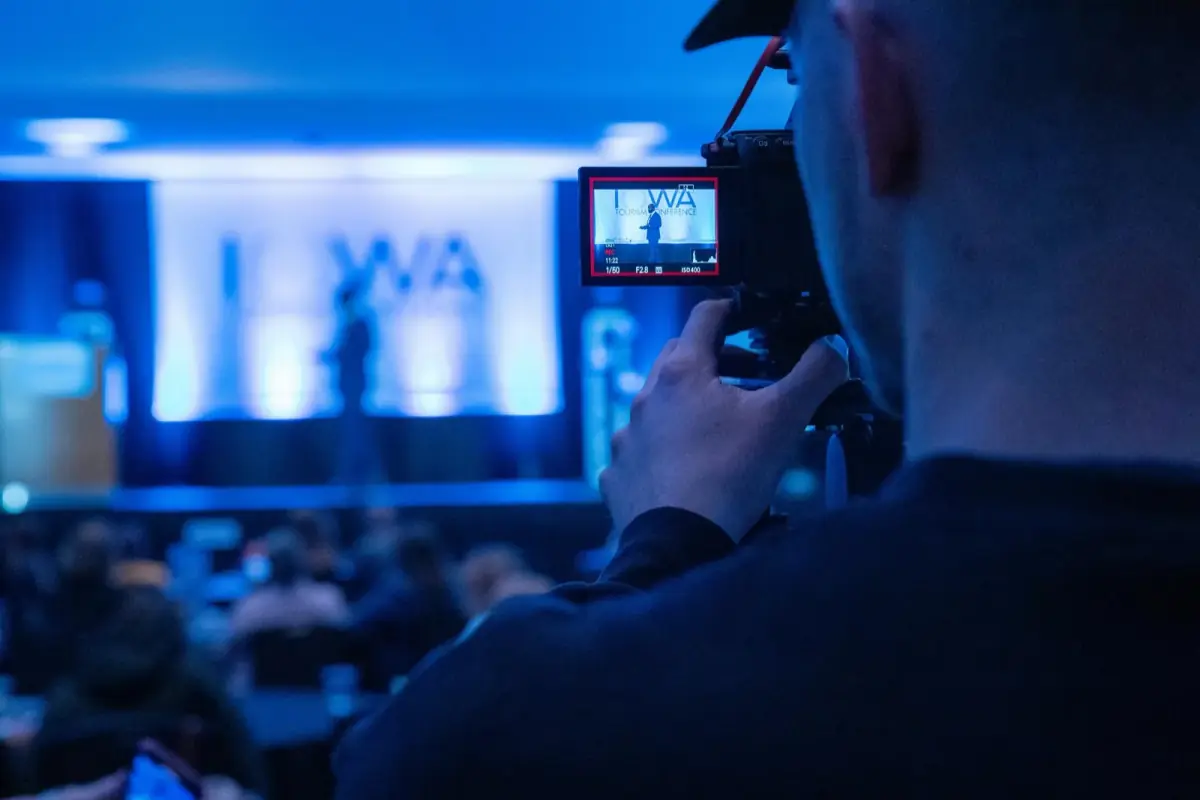
Every prospective livestream client wants three or four cameras. Most of them only need one. The instinct to add cameras comes from broadcast television — sports, awards shows, talk shows — where multi-cam is essential because the action is unpredictable and the audience is at home. Most live business events do not match that profile, and a multi-cam package can quietly hurt the show.
This is the conversation we have with clients before quoting the camera package.
What more cameras actually buys you
Adding cameras gives you three things, in order of frequency-of-use:
First, redundancy. If a camera fails or has a focus problem mid-keynote, you cut to another angle. This matters most for events that cannot be redone — the all-hands that has a thousand remote viewers, the awards moment that only happens once.
Second, visual variety. Cutting between angles holds attention longer than a single static shot. This matters for long programs where viewers are watching from home or a phone, where any monotony loses them.
Third, the ability to cover unscripted action. Q&A sessions, audience reactions, performances on stage — none of this can be covered well by a single fixed camera.
What more cameras actually costs
But cameras are not free, and the cost is not just rental. Each additional camera adds:
- Another operator or another preset setup, both of which need direction
- Another video stream that the switcher needs to handle, which means a more capable switcher and more cabling
- More color matching, which is real labor
- More setup time, which compresses the time available for audio and lighting checks
- More chance of an error that the audience sees on camera — a wandering shot, a missed cut, a focus hunt
For a one-hour keynote, four cameras might give you fifteen extra seconds of "production value" that an attentive viewer would notice. For the same money, a single well-placed camera plus stronger audio, real graphics, and a tighter program would give you a dramatically better show.
When one camera is the right answer
A single camera is the right call when:
- The program is mostly one talker on a stage, like a keynote
- The audience is mostly in-person and the stream is a courtesy to remote viewers
- The budget is constrained and you have to choose between camera count and audio quality
- Setup time is short, like a half-day rental
In that case, we position one camera on the center aisle at about row five, lock down the framing for a comfortable medium shot of the lectern, and put 100% of the camera budget into a great lens, a great operator if one is available, and stable mounting. The output looks more polished than four cameras of average quality.
When multi-cam is genuinely needed
Multi-cam earns its cost when:
- The program has multiple talkers in different positions, like a panel discussion or a fireside chat
- There is real audience action — a fashion show, an awards ceremony, a performance
- The stream is the main deliverable, not a courtesy — annual reports, product launches, broadcast-style events
- The program is long enough that visual variety matters for retention
For those, three cameras is usually the sweet spot: a wide-shot master, a tight-shot lectern or chair, and a roaming angle. Four cameras adds diminishing returns. Five and beyond is rarely worth it unless the program calls for sports-style coverage.
The decision
The simplest way we frame this to clients is this question: would adding another camera be more valuable than upgrading the audio, the graphics, or the operator quality you already have? If the answer is no, do not add a camera. If the answer is yes — for example, because the program has multiple stage positions or an unpredictable audience moment — add the camera and protect the budget for that operator.
Camera count is the most visible number on a livestream quote. It is also the one that most often gets sized wrong. We treat it as the last decision, not the first.